TOSHIBA HDWL110
From Computing Classics Wiki
Revision as of 06:53, 21 June 2022 by TheDragonFire123 (talk | contribs) (Text replacement - "{{smartattr |0x01 = Read Error Rate |0x02 = Throughput Performance |0x03 = Spin-Up Time |0x04 = Start/Stop Count |0x05 = Reallocated Sectors Count |0x07 = Seek Error Rate |0x08 = Seek Time Performance |0x09 = Power-On Hours |0x0A = Spin Retry Count |0x0C = Power Cycle Count |0xBF = G-Sense Error Rate |0xC0 = Power-off Retract Count |0xC1 = Load/Unload Cycle Count |0xC2 = Temperature (Max/Min/Current) |0xC4 = Reallocation Event Count |0xC5 = Current Pending Sector Count |0x...)
TOSHIBA HDWL110 is a hard drive model created by Toshiba. It is a rebadged, retail-oriented version of the TOSHIBA MQ04ABF100, and is a 1 TB 2.5" SMR drive released in 2018. It succeeds the TOSHIBA HDWJ110, displacing it in most applications, though the HDWJ110 nevertheless remains in production.
Similar units from other manufacturers include the WDC WD10SPZX-xxZ10Tx and ST1000LM048.
History
The HDWL110, along with its 2 TB SMR companion, the TOSHIBA HDWL120, were both released in 2018. Despite its launch, the CMR version, unlike Western Digital's and Seagate's, was not discontinued.
SMART attributes
| ID | Name |
|---|---|
| 0x01/1 | Read Error Rate |
| 0x02/2 | Throughput Performance |
| 0x03/3 | Spin-Up Time |
| 0x04/4 | Start/Stop Count |
| 0x05/5 | Reallocated Sectors Count |
| 0x07/7 | Seek Error Rate |
| 0x08/8 | Seek Time Performance |
| 0x09/9 | Power-On Hours |
| 0x0A/10 | Spin Retry Count |
| 0x0C/12 | Power Cycle Count |
| 0xBF/191 | G-Sense Error Rate |
| 0xC0/192 | Power-off Retract Count |
| 0xC1/193 | Load/Unload Cycle Count |
| 0xC2/194 | Temperature (Max/Min/Current) |
| 0xC4/196 | Reallocation Event Count |
| 0xC5/197 | Current Pending Sector Count |
| 0xC6/198 | Uncorrectable Sector Count |
| 0xC7/199 | UltraDMA CRC Error Count |
| 0xDC/220 | Disk Shift |
| 0xDE/222 | Loaded Hours |
| 0xDF/223 | Load/Unload Retry Count |
| 0xE0/224 | Load Friction |
| 0xE2/226 | Load 'In'-time |
| 0xF0/240 | Transfer Error Rate? |
Gallery
-
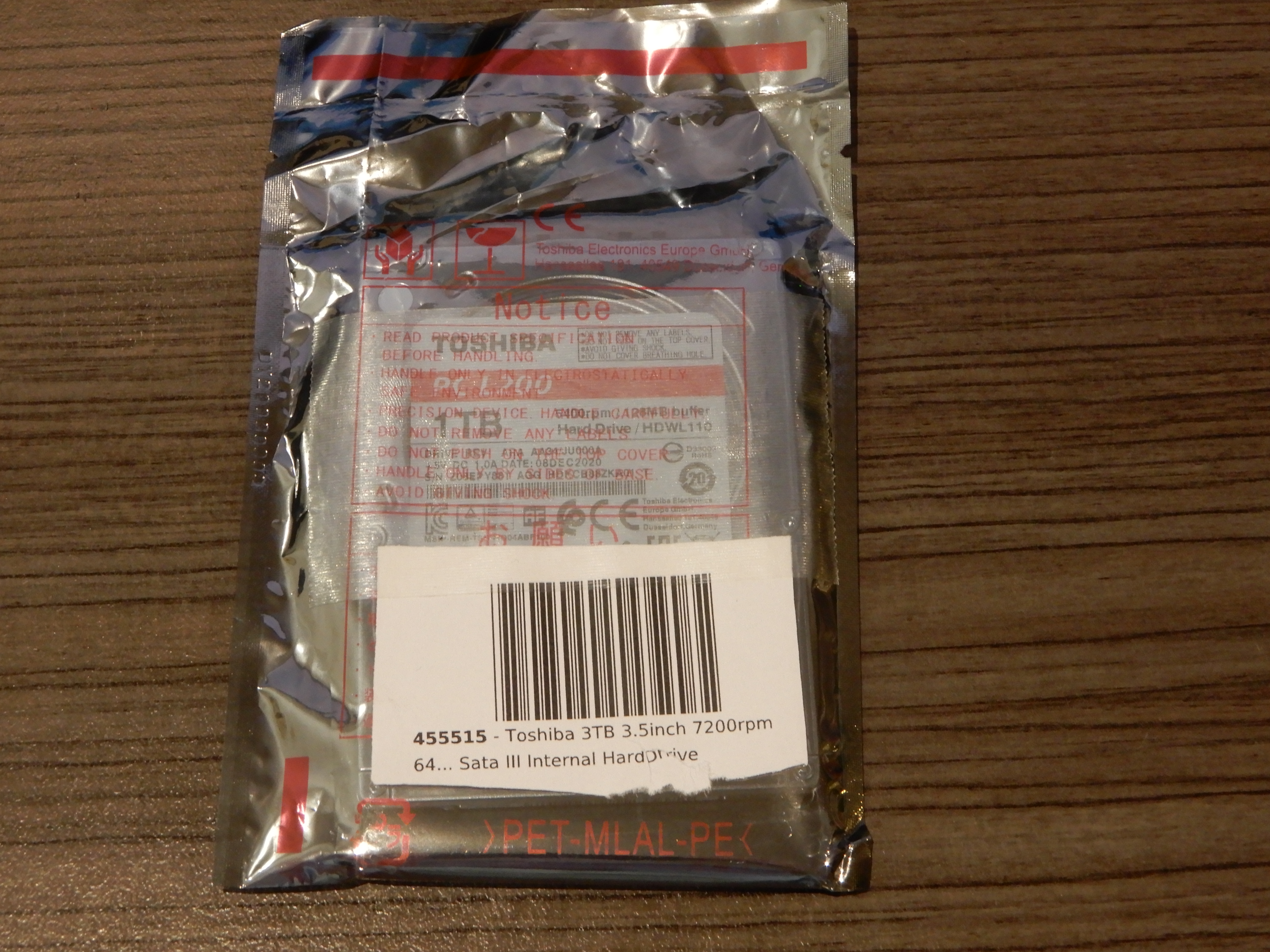 A HDWL110 in its original anti-ESD packaging.
 -
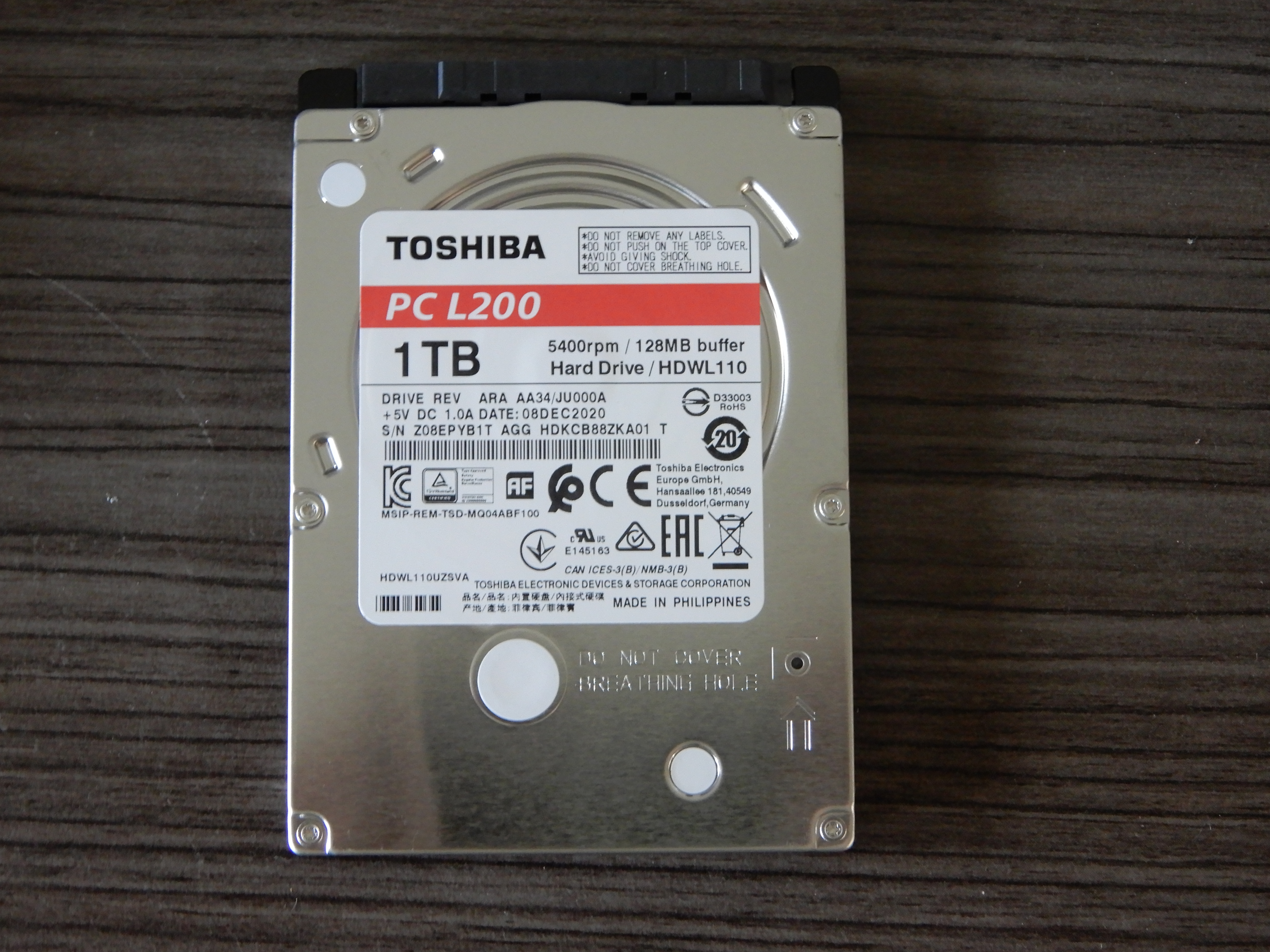 A newer HDWL110 with its warning block on the top right next to the logo, rather than below the serial number barcode, due to being displaced by the Ukraine regulatory marking.


References
- ↑ "Toshiba releases increased capacities and new model variations of the N300, X300, and L200". Toshiba. 20 April 2018. Retrieved 10 March 2021.